Familiarity with the names and functions of an oven's components is beneficial for anyone who regularly prepares meals. Referring to a labeled diagram can assist in identifying specific parts, while the following guide provides further detail to enhance your understanding of how the appliance operates.
1. Oven Door
The oven door serves as the primary access point for placing and removing food. Regardless of the oven type, operation begins and ends with opening and closing this component. Many models incorporate a window into the door design, allowing visual monitoring of food during the cooking process without releasing heat.
2. Oven Rack
Oven racks provide the surface upon which food containers are placed for baking, broiling, or roasting. Their position within the oven cavity can be adjusted before heating begins, and rack placement significantly influences cooking results by altering the food's proximity to the heat source.
3. Oven Light Bulb
Located typically near the top of the oven interior, the light bulb illuminates the cavity, enabling the user to observe food as it cooks. For bulb replacement, consult the owner's manual for the correct wattage and specific instructions.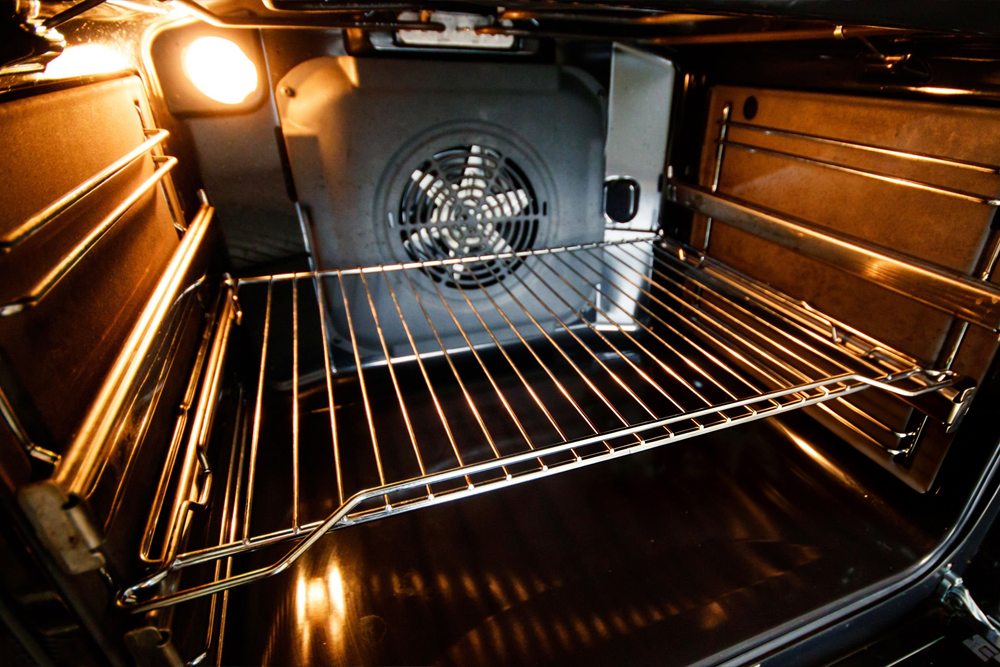
4. Warming Drawer
Found on selected oven models, the warming drawer is a separate compartment designed to hold finished dishes at serving temperature while other items continue cooking.
5. Bake Element
This is a primary heating component responsible for generating the heat required for baking and roasting. It is usually situated at the bottom or rear of the oven cavity. If a malfunction is suspected, professional inspection is recommended.
6. Convection Fan
In ovens equipped with a convection cooking feature, this fan circulates hot air throughout the interior. This continuous airflow promotes even heat distribution across multiple racks and helps reduce surface moisture on foods, contributing to browning and crisping. If the fan blade fails to spin, convection heating may be unavailable.
7. Broil Element
Positioned at the top of the oven cavity, the broil element generates intense, direct heat directed downward onto food. This is particularly effective for quickly browning the surface of items such as thin cuts of meat or for achieving a crisp exterior.
8. Element Cover
Present on select oven models, this panel conceals the bake element, typically located at the bottom of the cavity. Its presence can simplify cleaning by providing a smooth surface from which spills can be more easily wiped away.
9. Oven Door Handle
Attached to the exterior of the oven door, the handle provides a safe means to open and close the appliance without contacting potentially hot surfaces.
10. Control Panel
Situated on the exterior of the oven, typically above the door or on the backsplash, the control panel houses the user interface. It allows for the selection of cooking modes, temperature settings, and other operational functions.
The primary distinction between electric and gas oven designs relates to their respective heat generation systems. Gas ovens utilize igniters to combust a fuel source—typically natural gas or propane—which produces heat. During operation, this combustion process may release a small amount of moisture into the oven cavity.
Electric ovens, in contrast, are equipped with heating elements that generate heat through electrical resistance. As no combustion occurs, this type of oven tends to produce a drier heat environment compared to gas models.
The heating element located at the base of the oven cavity is referred to as the bake element. This component serves as the primary source of heat for most oven functions. Many of the standard cooking techniques—such as baking and roasting—rely on the operation of this element to generate and maintain the required temperature.
The regions of the oven that become hottest are generally those closest to the active heating elements, whether located at the top or bottom of the cavity. When both elements are in use, the upper portion of the oven tends to be hotter than the lower section due to the natural tendency of heat to rise. This temperature variation explains why positioning food in the center of the oven is frequently recommended, as it promotes more balanced heat exposure from all directions.
elecontro® has specialized in kitchen appliance control for over 20 years, offering a range of functional oven timers and customizing them to suit your specific needs and preferences. Our team of innovative engineers and designers remains at the cutting edge of kitchen appliance control technology.